
Kedarnath Track Explained: What the 16 km Climb Really Looks Like, Stage by Stage
What the 16 km Kedarnath trek really feels like, stage by stage, plus registration, pony and helicopter options, what to carry and safety tips.
 ssbtarvels
The Kedarnath trek is 16 km of steady climbing, and most people only hear that number. This post walks you up the trail stage by stage, so you know what each part feels like, what to carry, and when to rest.
Before You Take the First Step
The trek begins at Gaurikund, but your yatra really starts a few days earlier. Three things decide how your climb goes.
1. Registration. Registration for the Char Dham Yatra is mandatory and free. Register on the official Uttarakhand tourism portal (registrationandtouristcare.uk.gov.in), and carry the slip and a photo ID. Rules can change each season, so check the portal before you travel.
2. A night at a lower altitude. Kedarnath sits at about 3,583 metres, and the trail gains roughly 1,500 metres. Spending a night at Guptkashi or Sonprayag before the climb helps your body adjust.
3. Your plan B. The trek can be done on foot, with a pony or palanquin, or you can fly part of the way by helicopter. Helicopters depend on the weather and can be cancelled at short notice, so never make them your only plan.
Getting to the Starting Point
Kedarnath has no road to the temple. The last motorable point is Gaurikund.
- From Rishikesh or Haridwar: Travel by road through Devprayag, Rudraprayag and Guptkashi to Sonprayag and Gaurikund. Rishikesh to Gaurikund is roughly 220 km.
- Nearest airport: Jolly Grant, Dehradun.
- Nearest railway stations: Rishikesh and Haridwar.
- Last stretch: Private vehicles usually stop at Sonprayag, and shared local transport carries pilgrims on to Gaurikund.
The Climb, Stage by Stage
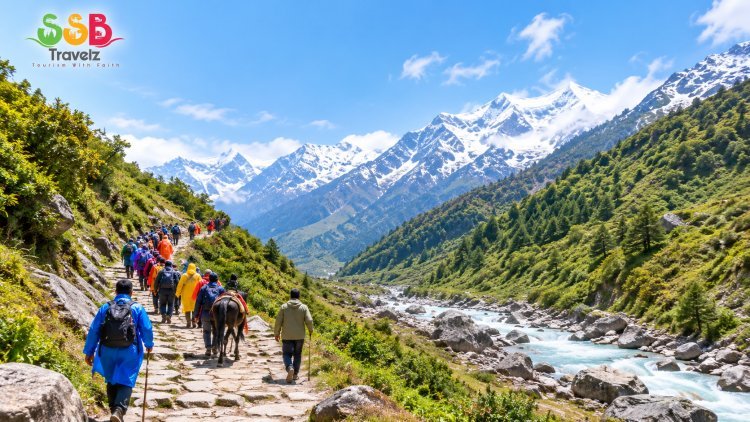
The trail follows the Mandakini river up the valley. Distances between points vary by source and by the year's route, so think of these as stages rather than exact marks.
Stage 1: Gaurikund, the start Most pilgrims start early in the morning, often before sunrise, to avoid the afternoon heat and rain. The first stretch is crowded and lively, with the river beside you. Go slowly. Pacing yourself here decides the rest of the day.
Stage 2: Jungle Chatti and Bhimbali, the long middle The path climbs steadily through forest and open slopes. There are small tea and food stalls, and benches for rest. This is where many people start to feel the length of the trek. Drink water often and eat small snacks.
Stage 3: Rambara and Linchauli, the thin-air stretch The air feels colder and thinner as you rise. Breathing gets heavier and your pace will slow. That is normal. Stop, breathe, and continue. If you feel a severe headache, dizziness, vomiting or breathlessness that does not ease with rest, tell someone and consider turning back.
Stage 4: The final approach The valley opens, the snow peaks come closer, and the temple appears ahead on the plateau. This last part is often the most emotional. The path is flatter now, but fatigue is at its highest, so keep your steps careful.
At the top You arrive at the temple area, where you can register your darshan slot as per the current system and join the queue. Keep warm clothing handy, because you will cool down quickly after the climb.
What It Feels Like, Honestly
- It is a long, steady uphill walk, not a technical climb.
- The length and altitude are what tire people, not the steepness.
- Many people take most of a day to reach the top, and breaks are normal.
- The weather can change within minutes, from sun to rain to cold wind.
If you are in reasonable health, walk daily for a few weeks before the trip. It makes a real difference.
Pony, Palanquin or Helicopter: Which One Suits You?
| Option | Best for | Things to remember |
|---|---|---|
| Walking | Healthy adults who want the full pilgrimage | Start early, pace yourself, carry rain gear |
| Pony or palanquin | Elderly travellers or people who tire easily | Use official counters and rates, and hold on firmly on narrow stretches |
| Helicopter | Those who cannot do the climb | Weather-dependent, can be cancelled, book only through official channels |
Doctors usually advise anyone with heart, blood pressure, breathing or sugar problems to get a check-up before choosing any of these.
What to Carry
- Registration slip and photo ID
- Thermals, a warm jacket, gloves and a woollen cap
- Rain poncho or waterproof jacket
- Strong, broken-in trekking shoes
- A small first-aid kit and your regular medicines
- Water bottle, glucose or light snacks
- Torch, power bank and some cash
Keep your bag light. Every extra kilogram feels heavier at altitude.
When the Trail Is Open
The temple opens around Akshaya Tritiya in April or May and closes around Bhai Dooj in October or November. In 2026 it opened on 22 April. During winter, the deity is worshipped at Omkareshwar Temple in Ukhimath.
May to June is the busiest time, September to October is quieter and clearer, and July to August is monsoon, when landslides can disrupt the route. If you are reading this in October, the 2026 season is almost over, so use this to plan for next year and confirm the opening date once it is announced.
Quick Questions
How long is the trek? About 16 km one way from Gaurikund. Some sources say up to 18 km, depending on the route.
Can elderly people do it? Many do, with ponies, palanquins or helicopters. A doctor's advice first is strongly recommended.
Is a ticket needed for darshan? No paid ticket is needed for normal darshan, but registration is mandatory.
What if I feel unwell on the way? Stop, rest, and do not push through serious symptoms. Descend if needed and seek medical help.
Last Word
The Kedarnath trek is not about speed. Start early, move steadily, rest without guilt, and let the climb be part of the pilgrimage. The moment the temple comes into view is the one most pilgrims carry home with them.